 |
 |
 |
The History of the Ghost House (Liebig House | Neu-Heusis)
Anyone who has driven past the turnoff to the
Daan Viljoen Park from
Windhoek
and continued for several kilometres
futher past
Baumgartsbrunn
along the gravel road
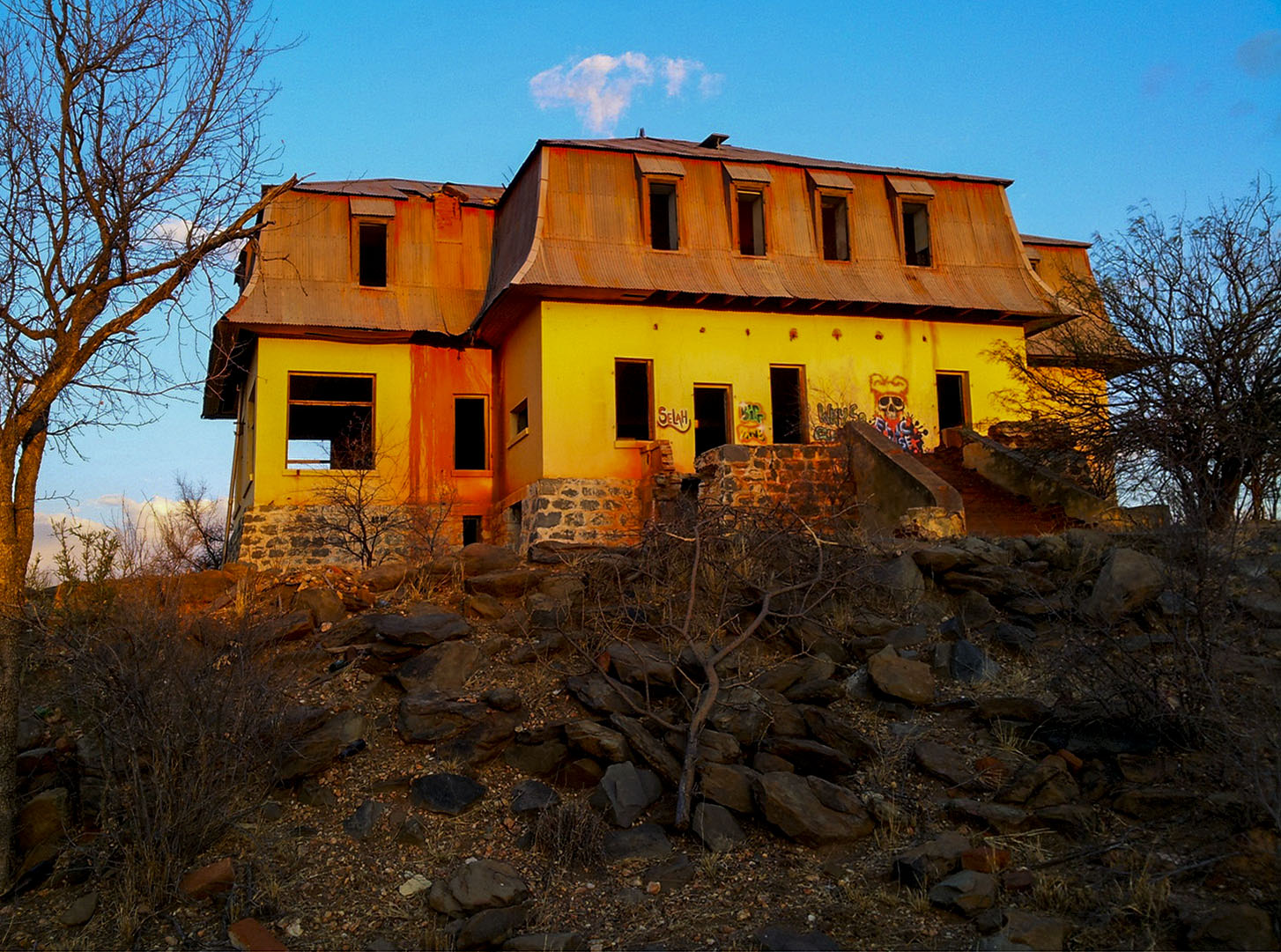
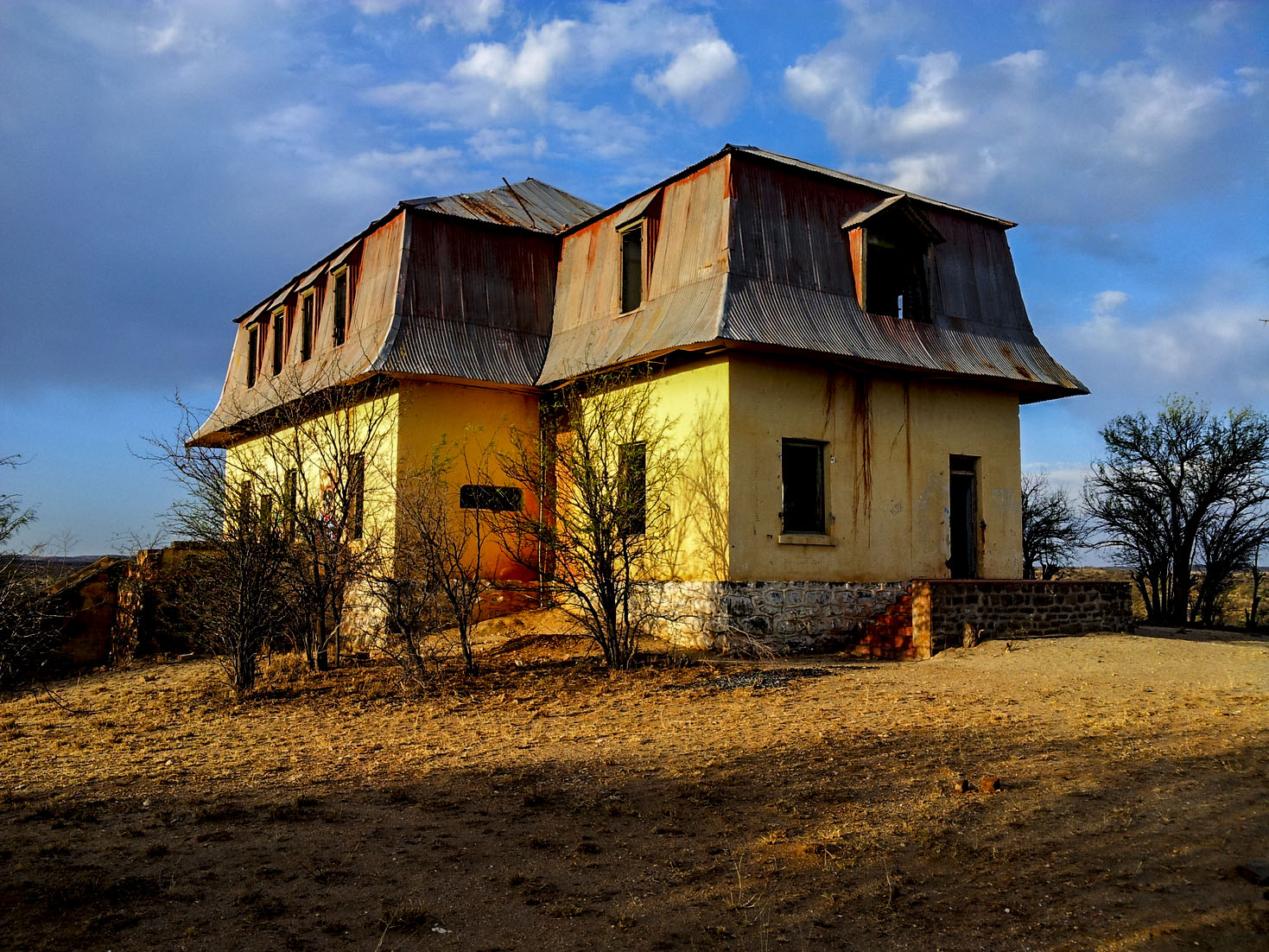
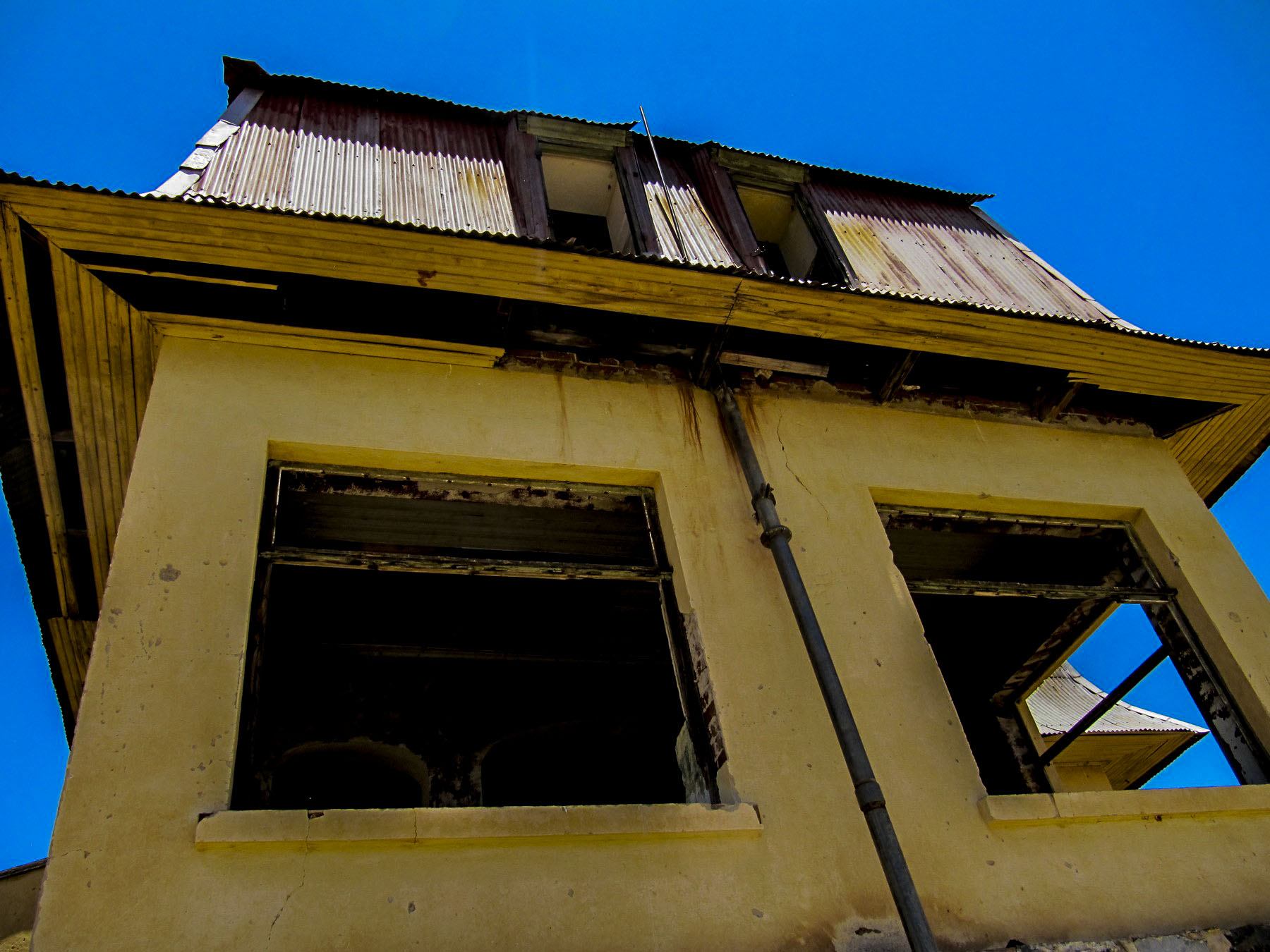
perhaps have seen a large abandoned dilapidated building on their left hand side.
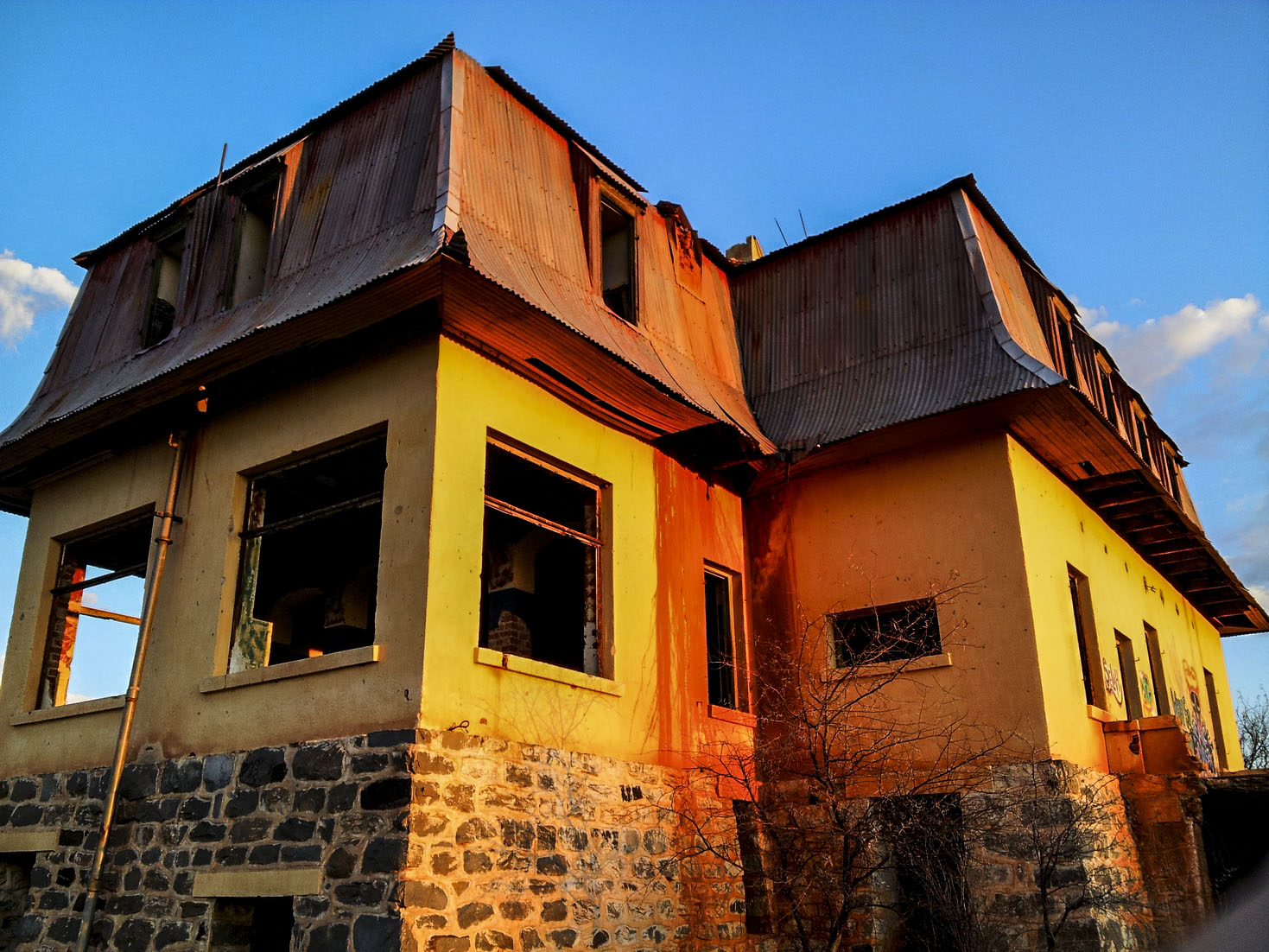
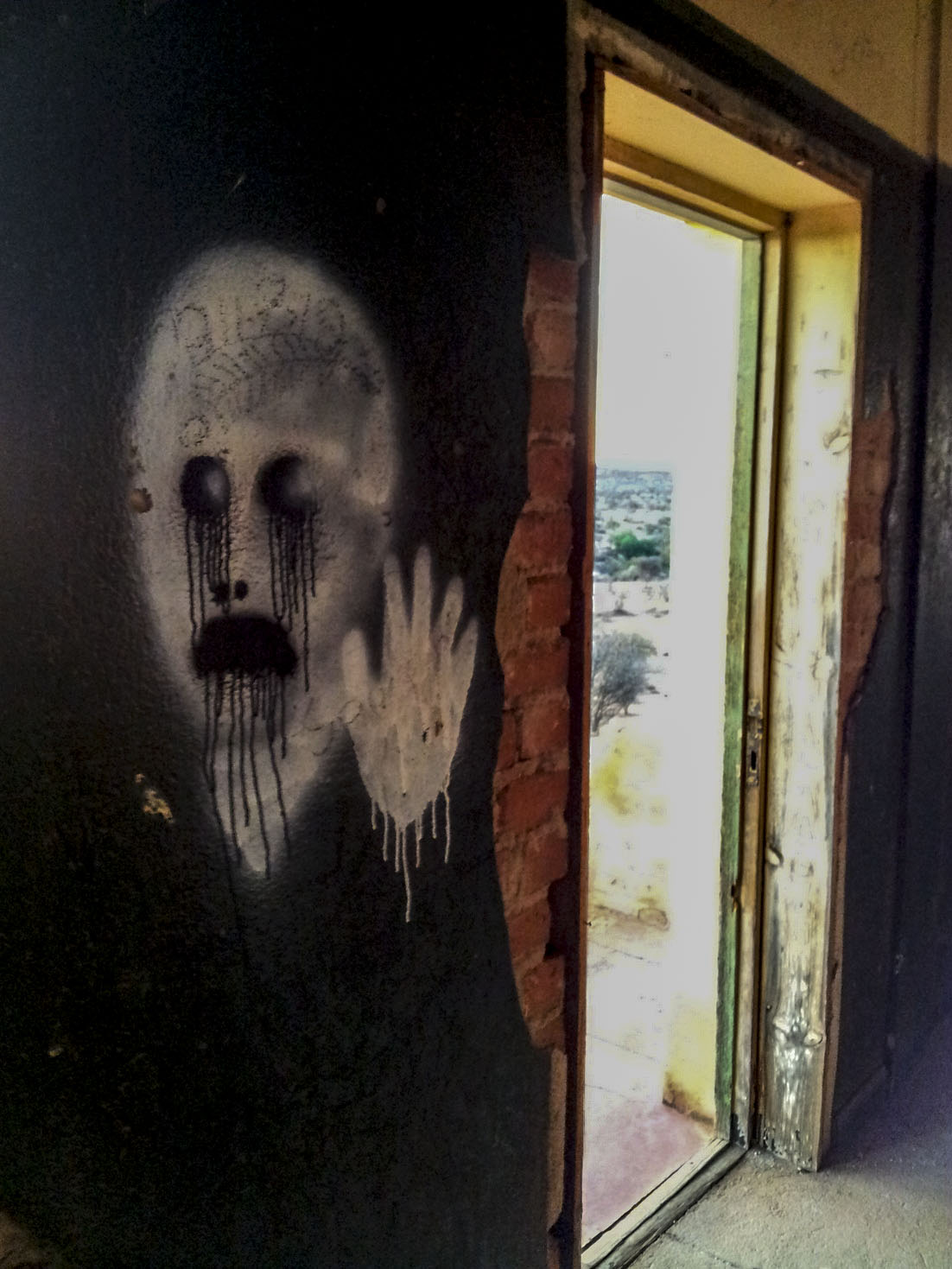
Many people living in Windhoek know it as a ghost house and it is common to see people using it as a place to braai. Yet while the existence of the ruined house is widely known, the history,
closely linked to colonial history of Namibia, and the identity of the ghosts who might inhabit it is not.
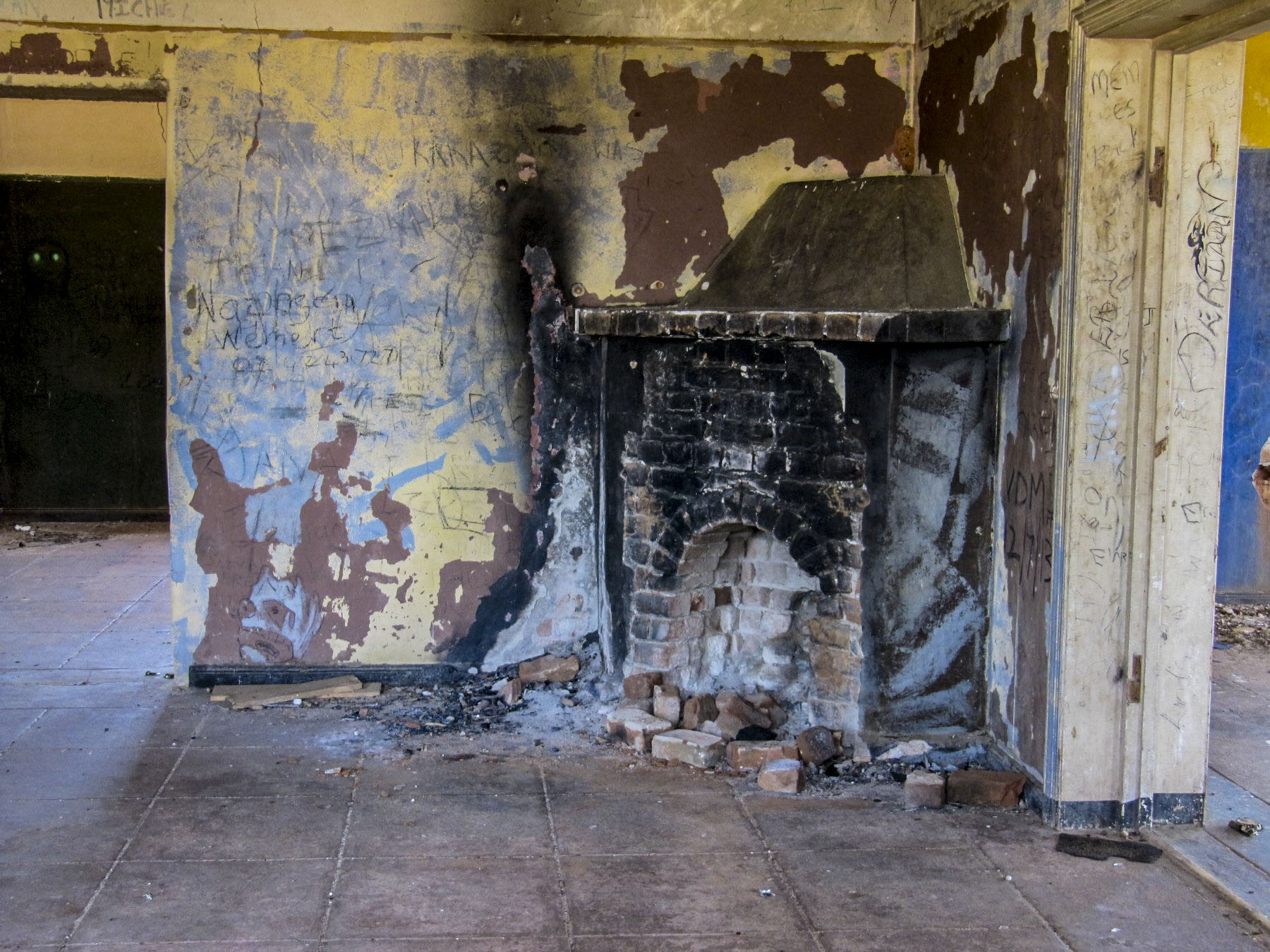
The site still displays signs of the extravagant wealth of its former occupants. The lounge, the walls of which have been painted in recent years with artistic prints, still contains the remains of a large fireplace. The garden apparently once featured a statue, a fountain and an ornamental carved fish from which water flowed into a pond.
There is an opinion that in colonial times house served as bachelor quarters for
German soldiers, while the nearby Trockenposten served as a "drying out" house
for soldiers recovering from drinking binges in Windhoek.
Video Windhoek & central region
|
|
|
|
The house was originally built during the German colonial period in 1912-13 to house the farm managers of the Karl Liebig Company, which specialised in
cattle breeding.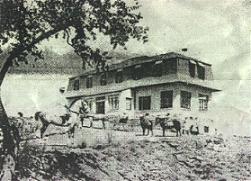 The Liebig Company owned most of the commercial farming land in the Kuiseb River
basin upper catchment and was formed in 1907 by the Deutsche Farmgesellschaft of
South-West Africa. Liebig Co bought large areas of land on a nationwide scale -
in order to establish a cattle farming and meat processing industry in the
country. The company was chiefly interested in production of meat extract Bovril
for selling on international market. The centre of activities was the farm Neu-Heusis around 40 km west of Windhoek located within Kuiseb River basin.
Liebig House was built in true German architectural style. The house was an
important stopover for travellers between Windhoek and the Atlantic coast and
occupied by the director of the Liebig Company. More houses were built on the
farm and some are still in use by the owner of the farm. The farm had own shop,
school and post office as well as even a skittle-alley which was the only one on
a farm in South-West Africa. Liebig Company owned more than 130,000 ha of land
in Kuiseb River basin, divided into several smaller farms after First World War.
The Liebig Company owned most of the commercial farming land in the Kuiseb River
basin upper catchment and was formed in 1907 by the Deutsche Farmgesellschaft of
South-West Africa. Liebig Co bought large areas of land on a nationwide scale -
in order to establish a cattle farming and meat processing industry in the
country. The company was chiefly interested in production of meat extract Bovril
for selling on international market. The centre of activities was the farm Neu-Heusis around 40 km west of Windhoek located within Kuiseb River basin.
Liebig House was built in true German architectural style. The house was an
important stopover for travellers between Windhoek and the Atlantic coast and
occupied by the director of the Liebig Company. More houses were built on the
farm and some are still in use by the owner of the farm. The farm had own shop,
school and post office as well as even a skittle-alley which was the only one on
a farm in South-West Africa. Liebig Company owned more than 130,000 ha of land
in Kuiseb River basin, divided into several smaller farms after First World War.
Liebig House, like "Liebig's Extract of Meat Company", was named after Baron Justus von Liebig (1803-1873). The renowned German chemist is widely credited as the founder of organic and agricultural chemistry and experimental teaching. The broader public knew him as the inventor of the meat extract, a cheaper version of which was introduced in 1899 under the OXO brand. The original extract was based on a remedy that Liebig developed in 1852 for a friend's daughter who contracted cholera while staying in his house. Liebig's Extract of Meat was initially sold in small quantities by pharmacies as a tonic for severe bowel and intestinal disease.
Justus von Liebig, however, intended his meat extract as a nutrient, in particular for the poorer classes who could not afford to eat meat. Large-scale production in Uruguay, where beef was literally left to rot, eventually turned his vision into reality. In Uruguay cattle were kept for the skin, the upper layer of fat, the bones and the horns. Large quantities of meat could not be utilized because cold storage facilities were still unknown at the time. German engineer Georg Christian Giebert obtained a license from Liebig and in 1862 started producing Liebig's Extract of Meat in Fray Bentos, a new settlement on the Uruguay River. Three kilograms of meat was needed to make 100 grams of extract. The only other ingredient was salt (4%).
Three years later the success of Liebig's Extract of Meat led to the establishment of Liebig's Extract of Meat Company (LEMCO) in London. By 1882 the company in Fray Bentos was turning out 500 tons per year. Its products, sold with popular trading cards for almost a hundred years, are the predecessors of European condiments, stock cubes, and packet soups. LEMCO was acquired by the Vestey Group in 1924 and became part of Unilever in 1984.
The history of Khomas Hochland (Namibian central highland area) ghost house is tied to Liebig's Extract of Meat Company (LEMCO). LEMCO established the Deutsche Farmgesellschaft (German farm association) late in 1907 and bought 210,000 hectares of land in what was then the German colony of South West Africa. The holdings were acquired for cattle breeding to ensure a steady supply of beef for the production of extract and included the farm Neu-Heusis as it is today as well as the surrounding land and several farms in other areas. Neu-Heusis became LEMCO's headquarters in the German colony, along with a production site in Fray Bentos in Uruguay, which had been operating since 1862.
The extensive reception and living rooms on the ground floor and the bedrooms on the upper floor were luxuriously furnished. As befitted a manor house at the time it even sported a winter garden (conservatory). Liebig House was one of the first farmhouses in the country to have electricity, produced by its own generator, and flush toilets. The garage complete with mechanic's pit was another much-admired novelty. The house was surrounded by a manicured garden with extensive lawns, a bubbling fountain and a pond with water lilies.
Other construction work at Neu-Heusis included staff accommodation, an office building with battlements and a fortified tower, stables, a smithy, cold storage and a barn for shearing sheep. The number of employees was so large that in 1912 a shop and a post office were opened. There was also a church and a school and even a skittle alley. There was probably no other farm in the colony as well equipped as Neu-Heusis.
One of the managers who lived in the house was Alexander Scotland who served as a British secret agent in Namibia during the German period. Scotland claims in his autobiography to have been given an appointment in the German Schutztruppe and to have been responsible for encouraging the guerrilla leader Johannes Christian to agree to a ceasefire with the Germans on 23 December 1906.
 |
 |
 |
However, in 1914, after providing details of the positions of German troops in southern Namibia, Scotland was arrested and imprisoned. After the German defeat by South Africa in 1915 during World War
One, Scotland left Namibia, but continued his work in military intelligence. In 1947 he served as the Chief Officer of the War Crimes Investigation Unit which compiled evidence for use in the Nuremberg trials against Nazi war criminals at the end of World War II.
The impressive house (on "Neu-Heusis" Farm) seems to have provided the headquarters for the management of all the land purchased by the Liebig
company. "Liebig's Extract of Meat Company of London" ("LEMCO") had purchased 210 000 hectares of land in the Khomas Hochland
(central highlands area in Namibia) on
18 September 1907. Perhaps readers know whether the
company had any connection with the beef-flavoured drink, Bovril, which was very popular in Britain at this time and based on
"extract of meat".
The Deutsche Farmgesellschaft was disbanded
after the First World War. The South African government bought the farm land
from the Liebig Company in 1939 and divided it into farms that were made
available mainly to new settlers from South Africa. Liebig House, which was
still the director's residence, was sold to the Courtney-Clarke family in 1945.
Photographer Margaret Courtney-Clarke spent her childhood there in the 1950s. In
1964 the Hoff family acquired Neu Heusis. Liebig House was part of the farm. A
well-maintained smaller version of the house can be found on the grounds of St
George's College in Windhoek. It was built for Dr. Hartig some 100 years ago.
In 1939, the South African Government bought the land from the Liebig Company. Sixty-five farms were apparently created from the land and were used to settle farmers from the Union of South Africa at the end of World War II.
In 1945, the "ghost house" was sold to the Courtney-Clark family. Well-known
photo journalist, Margaret Courtney-Clarke, who was born in Swakopmund, left
Namibia over 50 years ago. Both of her parents were born here and she is known
as being amongst Oprah Winfrey's close circle of "close friends".
 |
 |
 |
It is not clear when the house was finally abandoned and what is its current fate,
some sources suggest it was in 1955.
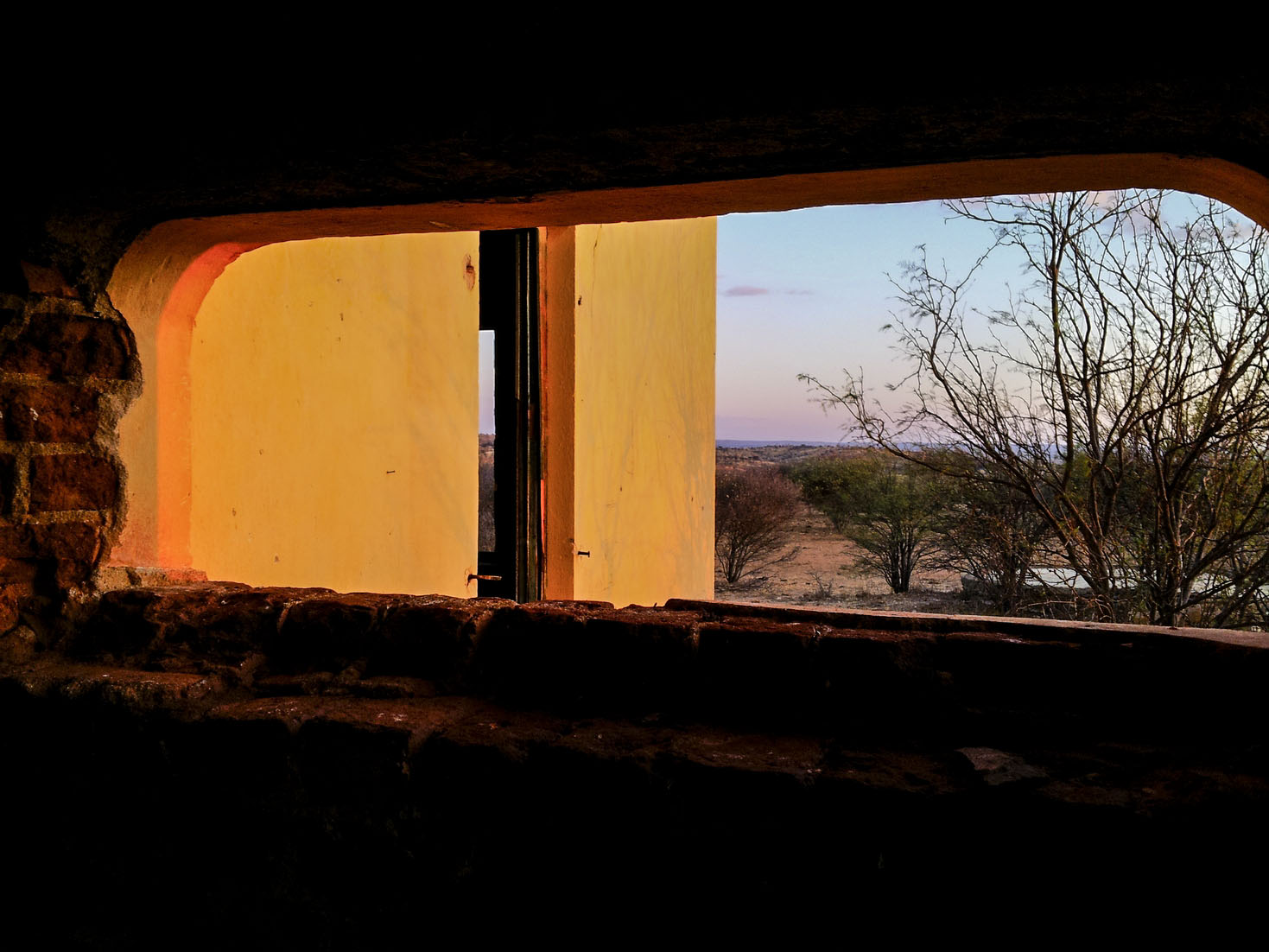
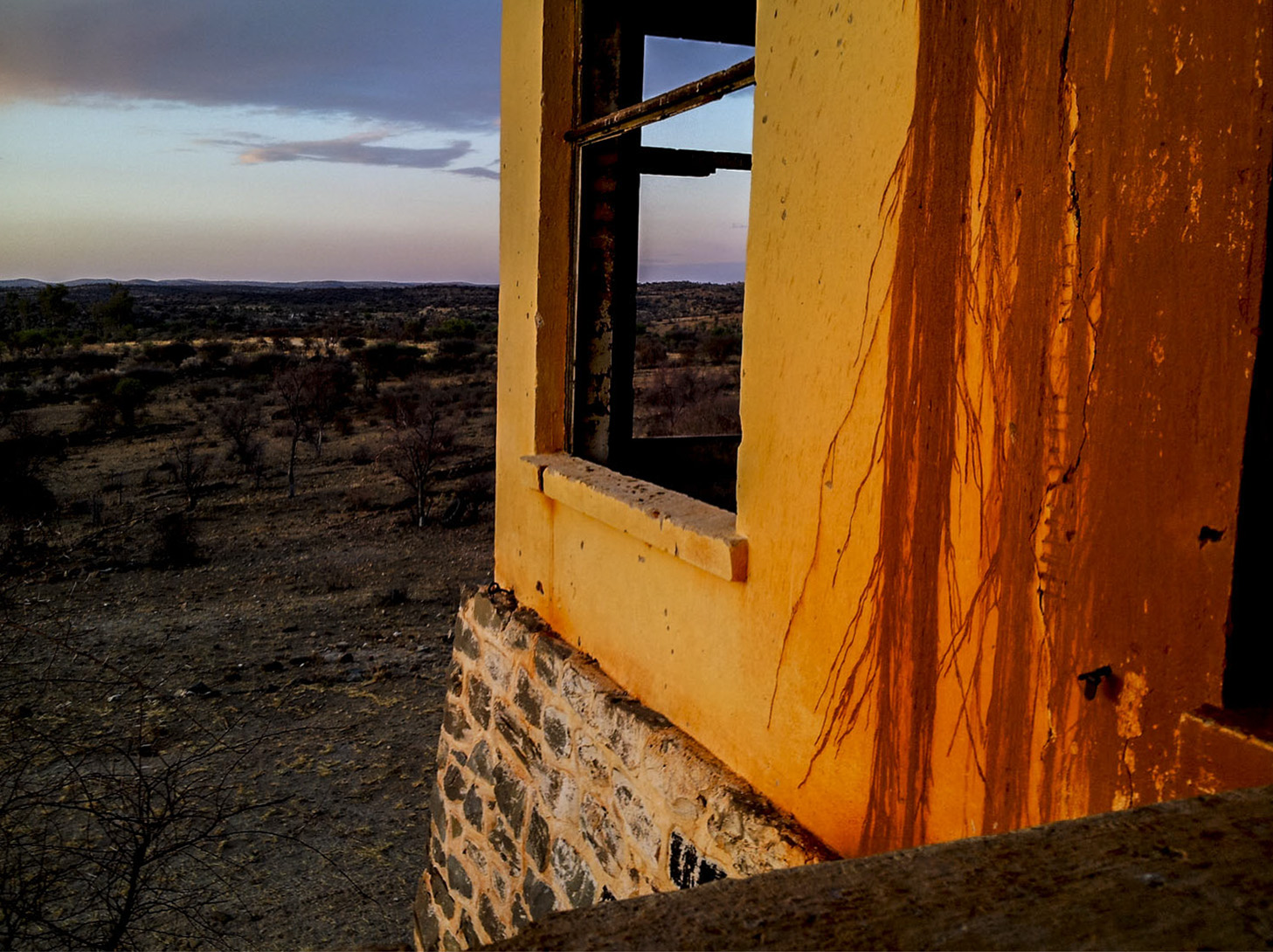
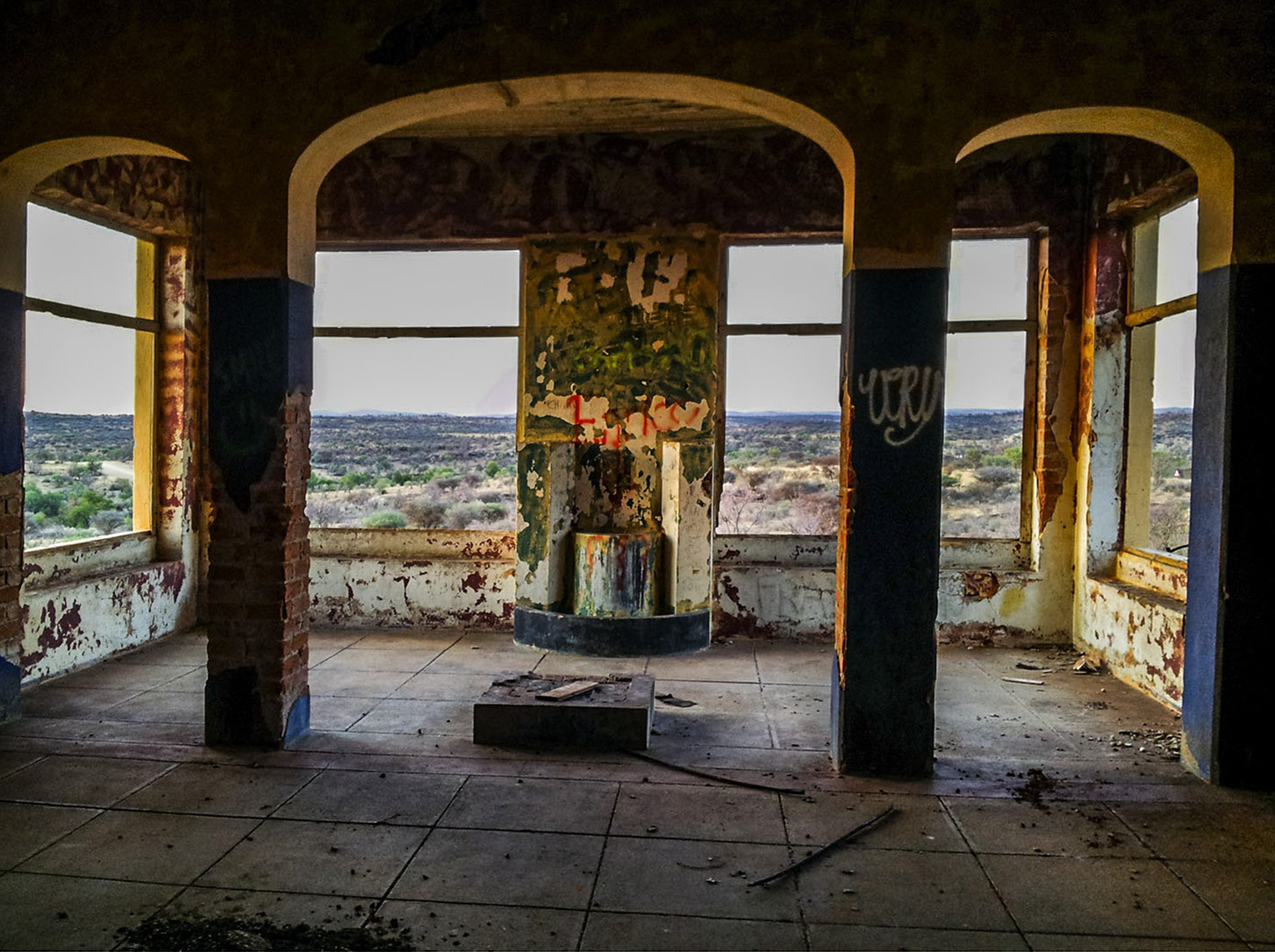
The large windows of the house provide beautiful panoramic views across the veld, whilst a deep rocky river gorge
bisected by an old dam can be found a short walk away from the house. Perhaps readers know more about the history of the house and its occupants. Or perhaps people might suggest whether they feel the house should be preserved, redeveloped or allowed to continue to decay.
After all, one might argue that the beauty of the building is in the way that the elements have worn the surfaces, while the wind hammers the loose corrugated iron sheets on the roof, as if to conjure up the ghosts of Alexander Scotland and the other former residents of the isolated farmhouse.
The name seems to derive from the Khoekhoegowab word ||Hoeses. The word refers to a deep chasm and indeed such a chasm can be found a couple of hundred yards downhill from the farmhouse. Professor Haacke of the African Languages Department of the University of Namibia has pointed out that the local Damara community in this area were also known as the '||Hoesedaman'.
Comment from Internet:
Andre Michau on July 23, 2017
at 12:40 am
This house belonged to my grandmother Marie Courtney-Clarke for a good while. I
used to visit her often in the 40s & 50s. I saw and heard ghosts on several
occasions.
Video including aerial views:
Photo gallery: http://sa-nam-news.blogspot.com/2015/11/namibia-liebig-ghost-house-in-khomas.html
Location of Liebig House
GPS: -22°36'30.09" 16°43'6.93"
Directions to Liebig House
Take road C28 from Windhoek towards Daan Viljoen Park, drive for around 20 km (last 16 km on gravel road). The house is on your left, 100 m from the road. Note that house is on private property.
Visitors!
We do not arrange visits to Liebig House and we do not have contacts of the farm owner!
Contact & information:
E-mail:
info@namibweb.com


Page created and serviced by

www.namibweb.com
Copyright © 1998-2025
namibweb.com - The online guide
to Namibia
All rights reserved |
JOIN
|
VIDEO PORTFOLIO
|
VIDEO/PHOTO COLLECTION
Telegram
| YouTube |
Blog
Page is sponsored by ETS &
Exploring Namibia TV
Disclaimer: no matter how often this page is updated and its accuracy is checked,
www.namibweb.com and ETS
will not be held
responsible for any change in opinion, information, facilities, services,
conditions, etc. offered by
establishment/operator/service/information provider or any third party