

Tsumeb
The Town and Region
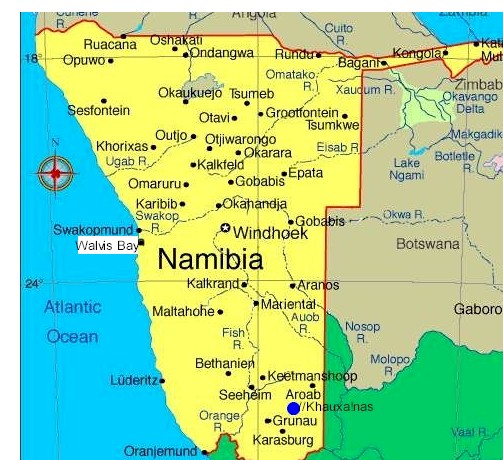
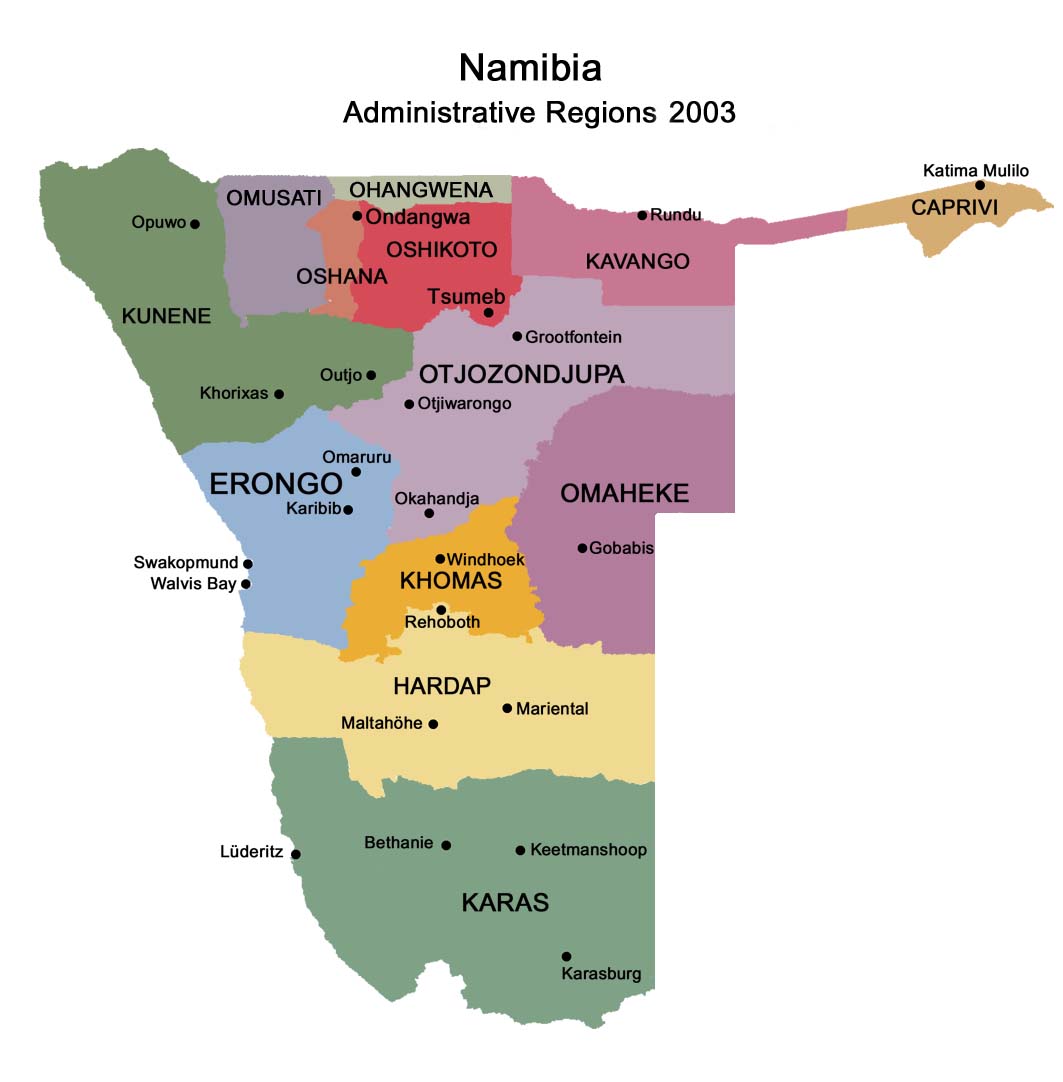
Tsumeb is located at 19°15' southern latitude and 17°42' eastern longitude, and
lies 1 310 metres above mean sea level. Windhoek, Namibia's capital city, is 380
km by air and 435 km by tarred road. The total population of Tsumeb and the
region is estimated at 22.500 (12 300 male and 10 200 female), of whom some 15
970 live in the town itself.
Tsumeb has a subtropical climate, with very hot summers and mild winters. The
mean maximum temperature lies at 29,7° C, while the mean minimum temperature is
14,4° C. Occasional thunderstorms occur during the summer rainfall months,
October to March. The average rainfall is 555 mm per annum.
The town is well known for its copper and lead smelters. Tsumeb boats the
biggest lead-producing mine in Africa, and is the fifth largest lead producer in
the world.
YouTube video of Tsumeb Museum:
A standard-gauge Trans Namib rail connection links Tsumeb with Windhoek, Walvis
Bay and the Republic of South Africa.
The following represent fundamental issues of the Tsumeb Town Council's mission
to promote the future development of the town and region:
We are inextricably part of northern Namibia, and commit ourselves to promoting
the concept of a unified regional approach in order to achieve our objectives,
which is possible with the existing structures.
We will strive for the upliftment of all our people, be it financially,
technically, intellectually, spiritually, physically or culturally.
We know that the region has the potential to maintain its position as the hub of
northern Namibia in the fields of agriculture, tourism, education,
administration, industry, commerce, recreation and culture.
We believe that agriculture is the primary economic sector that will facilitate
the execution of a viable and sustainable economy and provide both
entrepreneurial and employment opportunities.
We do realize, however, that the region's tourism potential must also be
utilized to the full.
We are convinced that Tsumeb is the gateway to the North as a whole, and that it
can serve as the prime locality for attracting appropriate industrial and
commercial enterprise, and for exports to other African countries and elsewhere
via the Trans-Caprivi Highway.
We also believe that, in order to achieve these goals, we must liaise closely
with especially the Government so as to avoid costly duplication.
YouTube video of Etosha National Park - wildlife & camps - part 1:
TeaterHuis
TeaterHuis is an old amphitheater style theater that has 535 seats. The building is recently renovated inside and the foyer is converted into a cafe with eclectic decor. It is still in the process of being transformed. The "new meets old" glamour is quite unique and trendy. The breakfast is great, coffee awesome and a nice selection of wines from over the world, local iced tea and craft beer to choose from. The accommodation is the former backstage dressing rooms and is tastefully decorated. Guests are given a warm welcome in a relaxed homey vibe. Access only via the theatre to the rooms, to sum up: unique and excellent.
YouTube video of Etosha National Park - wildlife & camps - part 2:
PHYSICAL INFRASTRUCTURE
Water
Ample quantities of water are available.
Static pressure : ± 4 Bar
Industrial: ± 2 Bar
YouTube video of Etosha National Park - wildlife & camps - part 3:
Roads
Tsumeb has a well-developed and maintained road network and aerodrome system.
Per capita, Namibia has more kilometres of road than any other country in
Africa, including South Africa. Additional prominent features of the country's
road-transport network include the excellent North-South axis between Angola and
South Africa, respectively, as well as the routes to the West Coast (Lüderitz,
Swakopmund and Walvis Bay).
Railways
Tsumeb is linked to TransNamib's railway network, and there is a siding adjacent
to the industrial section.
Transport further north (to Owambo and Angola) is, however, only possible by
road.
Sewerage Facilities
The town's sewerage disposal works currently operate below capacity, largely due
to the fact that it does not receive industrial effluent.
Telecommunication Facilities
There is an automatic exchange facility at Tsumeb, and this is to be connected
to an electronic system towards the end of 1992. International communication is
possible by either microwave or optic cable, which compares extremely well with
First-World standards.
SOCIAL INFRASTRUCTURE
Languages
Tsumeb and the region have a cosmopolitan community. Although the official
language is English, a great number of people speak Afrikaans, German,
Portuguese, Owambo, Herero and Damara/Nama.
Educational Institutes and Training Facilities
In all, seven primary schools cater for pupils at Tsumeb, while secondary
schools such as Otjikoto and Etosha High School compare favourably with any
other secondary school in Namibia.
The Adult Education Centre, which resorts under the Ministry of Education and
Culture, fulfils a major task in enabling adults to further their education.
The Tsumeb Corporation Limited's Apprentice School is a well-equipped training
centre that produces 60 new artisans annually. These are mainly electricians,
fitters and turners, boiler makers and mechanics.
Health Services
Tsumeb boats a well-organized and well-equipped health-service system, which
comprises the following facilities and staff:
2 Hospitals
3 Clinics
5 Ambulances with trained staff
7 Doctors
3 Pharmacists
First-aid personnel trained by Tsumeb Corporation staff
Churches
Tsumeb provides for many different faiths, and 19 denominations are evident in
the region.
Important telephone numbers (Tsumeb code 067):
| AMBULANCE | 221082 |
| FIRE BRIGADE | 221004 |
| FIRE BRIGADE CELLULAR | 0811 248677 |
| POLICE | 1 0111 |
| PRIVATE HOSPITAL | 221082/001 |
To print this page press Ctrl-P
Contact & information:
E-mail:
info@namibweb.com
Reservations are only accepted in writing: by fax or via e-mail.
Final availability confirmation: in writing: by fax or via e-mail.
Terms & conditions, Payment options and Cancellation policy
Page created and serviced by

www.namibweb.com
Copyright © 1998-2025
namibweb.com - The online guide
to Namibia
All rights reserved |
JOIN
|
VIDEO PORTFOLIO
|
VIDEO/PHOTO COLLECTION
Telegram
| YouTube |
Blog
Page is sponsored by ETS &
Exploring Namibia TV
Disclaimer: no matter how often this page is updated and its accuracy is checked,
www.namibweb.com and ETS
will not be held
responsible for any change in opinion, information, facilities, services,
conditions, etc. offered by
establishment/operator/service/information provider or any third party